

Why Schools Are Choosing Synthetic Grass for Playgrounds Over Natural Grass in Arizona
Keeping school campuses green in the harsh Arizona climate is a constant, uphill battle. And let’s be honest, the intense summer sun, paired with strict water conservation guidelines, makes natural grass almost impossible to keep alive. That is exactly why educational facilities across the state are rethinking their outdoor areas. Choosing synthetic grass for playground installations is rapidly becoming the new standard. This upgrade turns dry, dusty fields into vibrant spaces that kids use all year.
Natural grass demands nonstop watering, endless mowing, and harsh chemical treatments just to survive the heat. But modern alternatives give you a hypoallergenic, highly durable, and weather-resistant solution without that massive upkeep. Schools simply need reliable spaces where children can learn and play safely. Here is exactly what we will cover in this blog: the undeniable safety benefits, the real-world maintenance savings, and the environmental perks of making the switch.
The Core Benefits of Synthetic Grass for Playground Environments
When you are looking at surfacing options for children, safety always has to be the deciding factor. The thing is, natural grass combined with baked, rock-hard Arizona dirt just doesn’t absorb the impact of a kid taking a tumble from the monkey bars. High-quality synthetic grass for playground systems fixes this exact problem right out of the gate.
Did you know?
Modern artificial grass padding is rigorously tested to meet safety standards, providing critical fall height protection up to eleven feet to keep children safe during active recess.
Playgrounds take a serious beating every single day. And all that running and jumping quickly tears natural turf to shreds. This exposes compacted soil and rocks, heavily spiking the risk of injuries. Advanced synthetic systems use specialized underlayments to cushion impacts far better than old, messy wood chips or bare ground ever could.
Here is why artificial turf excels in playground safety-
- Superior Shock Absorption– Integrated padding layers give kids a forgiving surface, significantly lowering the severity of playground falls.
- Hypoallergenic Properties– Synthetic fibers don’t produce pollen. This is a massive relief for students dealing with severe seasonal allergies.
- Zero Toxic Chemicals– Ditching live grass means you also ditch the dangerous pesticides, herbicides, and synthetic fertilizers that irritate sensitive skin.
- Pest Reduction– Bugs thrive in damp soil. Fake grass removes their habitat entirely, drastically cutting down on bites and stings during recess.
Plus, nobody has to stress about students tripping over exposed sprinkler heads or uneven dirt divots anymore. Modern systems give you a flat, consistent surface that easily meets strict accessibility guidelines.
Why a Synthetic Grass Play Area Outperforms Traditional Lawns in Arizona
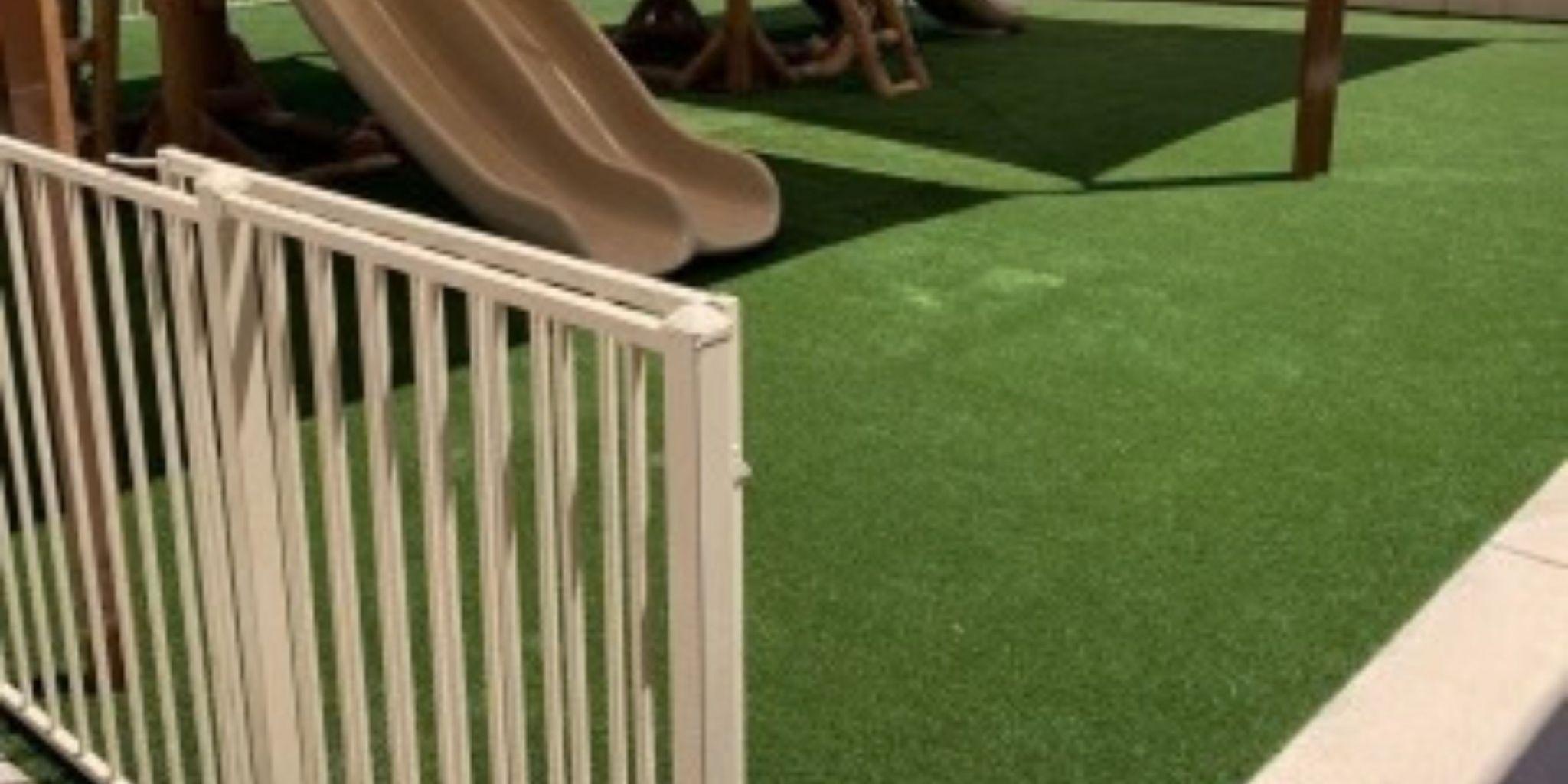
Arizona weather throws some incredibly unique landscaping hurdles at us. The intense summer heat fries natural lawns to a crisp. And then seasonal monsoons turn poorly drained areas into chaotic, muddy swamps. A designated synthetic grass play area handles both of these extremes without breaking a sweat.
Educators are actively hunting for water saving landscaping for Phoenix education facilities. Keeping traditional grass somewhat green requires thousands of gallons of water annually. But in an environment where water conservation isn’t just a buzzword, turning off the sprinklers makes a huge environmental and financial impact.
When you look at desert performance, the advantages are clear-
- Incredible Water Savings– Cutting out irrigation slashes monthly utility bills while strongly supporting local municipal water conservation goals.
- Monsoon Readiness– Advanced drainage systems let heavy rainfall pass straight through the turf backing. This stops puddles from forming and keeps mud out of the classrooms.
- Year-Round Usability– Natural fields need a lot of recovery time after a storm or heavy use. Synthetic surfaces are good to go for PE classes and recess 365 days a year.
- Dust and Dirt Control– High-traffic natural lawns turn into dust bowls fast. Artificial turf locks the ground beneath a secure barrier, keeping the campus air much cleaner.
And when you combine these traits with heat resistant synthetic turf installation technologies, schools can utilize advanced infills. These specific materials help keep the surface temperature noticeably cooler during those warm afternoon playtimes.
Assessing Grass for Playgrounds: Financial and Maintenance Advantages
Schools operate on tight, highly scrutinized budgets. We all know this. And trying to maintain natural grass for playgrounds eats up a disproportionate share of those limited funds. The thing is, paying for constant watering, fuel, mowing equipment, and endless reseeding drains resources that should definitely be spent inside the classroom.
By installing high-quality artificial turf for schools, administrators are making a high-return, long-term investment. It just makes financial sense.
Let’s look at the real-world maintenance improvements-
- No More Mowing– Groundskeeping crews skip the hours spent cutting grass each week. This reduces labor costs and cuts out loud equipment noise during school hours.
- Zero Reseeding– Bald dirt patches are history. The turf keeps a pristine, lush appearance without the need for expensive seasonal overseeding.
- Fewer Landscape Services– Schools can finally cancel those ongoing contracts for lawn fertilization, weed control, and aeration.
- Enhanced Curb Appeal– A vibrant, uniformly green campus creates a great first impression for prospective students, parents, and the local community.
Finding cost effective playground surfacing in AZ is a big deal for public and private institutions alike. The upfront installation investment usually pays for itself within a few short years through those massive utility and maintenance reductions. Plus, heavy-duty synthetic turf for schools easily lasts fifteen to twenty years under rigorous daily use.
Maximizing Hygiene and Longevity for Students
When hundreds of kids run around a space every single day, keeping it clean is a huge priority. Natural grass hides trash, debris, and animal waste incredibly well. But a modern playground & kids area turf system makes keeping things sanitary so much easier.
The tightly woven fibers stop foreign objects from sinking deep into the soil. And the antimicrobial properties of certain infills actively fight off bacteria and mold buildup, even after heavy, daily use.
Here is why synthetic setups promote better campus hygiene-
- Easy Debris Removal– Leaves, twigs, and snack wrappers can be quickly cleared away with a standard leaf blower or a simple plastic rake.
- Odor Prevention– Superior drainage means that any moisture washes away instantly without leaving a lingering smell.
- Stain Resistance– Mud and grass stains on school uniforms become completely obsolete. And parents absolutely love this.
Occasionally, high-traffic zones might need a quick refresh to get the blades standing tall again. Bringing in a professional synthetic grass cleaning service once or twice a year easily removes compacted dust, neutralizes any hidden odors, and makes sure the playground continues looking brand new.
Key Takeaways
- Synthetic turf significantly reduces injuries with advanced, shock-absorbing safety padding.
- Schools save thousands of dollars annually by completely eliminating lawn irrigation and maintenance.
- Artificial grass prevents seasonal allergies by removing pollen and toxic lawn chemicals.
- Advanced drainage systems eliminate monsoon mud and keep the playground usable year-round.
- Transitioning to synthetic surfaces strongly supports Arizona’s critical water conservation initiatives.
Step-by-Step Campus Upgrade: The Installation Process
Transitioning a school campus requires precision and genuine expertise. Here is how professional installers ensure you get a flawless, long-lasting result-
- Thorough Site Assessment– Experts look at the existing landscape, take precise measurements, and spot any specialized drainage or grading needs for the property.
- Excavation and Clearing– The team completely tears out the existing natural grass, weeds, and topsoil to create a clean, highly stable foundation.
- Base Preparation– Installers lay down a custom blend of crushed rock and gravel. They heavily compact this layer to guarantee a smooth surface that drains water rapidly.
- Integrating Safety Padding– To make sure the area features IPEMA certified artificial grass for kids, specialized shock-absorbing underlayments go directly over the compacted base.
- Turf Laying and Precision Seaming– The synthetic rolls are carefully rolled out, cut to fit the exact dimensions, and securely joined together so there are no tripping hazards or ugly visible lines.
- Specialized Infill Application– Installers spread high-performance infill across the surface. This weighs the turf down, keeps the blades standing tall, and helps reduce surface heat.
- Final Grooming and Inspection– The turf gets power-brushed for a natural look, followed by a rigorous safety check to make sure it meets all structural and athletic standards.
Choosing the best playground turf for Arizona schools guarantees this thorough process is followed correctly. A dedicated synthetic grass for playground project results in a resilient campus addition that endures decades of play.
Final Words
Upgrading educational facilities is a major decision. But the benefits are incredibly hard to ignore. By making the switch, administrators drastically reduce maintenance costs, conserve precious desert water, and create a far safer environment for the kids. Every campus deserves a pristine, durable foundation that easily withstands extreme weather and endless recess activities. Implementing synthetic grass for playground areas is easily the smartest landscaping investment a school can make.
Ready to transform your school’s outdoor space into a lush, maintenance-free haven? Contact Synthetic Grass Masters today for a free design consultation and discover exactly how premium turf installations can elevate your campus.
FAQs About Synthetic Grass for Playgrounds
Is artificial grass safe for school playgrounds?
Yes. Modern artificial grass uses IPEMA-certified padding that provides exceptional shock absorption, significantly reducing the risk of injuries from falls compared to hard dirt or wood chips.
Does synthetic turf get too hot for kids in Arizona?
While synthetic surfaces can warm up, specialized cooling infills and UV-resistant fibers help dissipate heat. Plus, shading structures keep the area perfectly comfortable during peak afternoon temperatures.
How long does playground turf last?
With proper professional installation and basic upkeep, high-quality playground turf easily lasts between 15 and 20 years. This makes it a highly cost-effective, long-term investment for educational facilities.
Do you still need to clean artificial playground grass?
Yes, but maintenance is minimal. A quick blowing of leaves and occasional rinsing is usually enough. For heavy use, a periodic professional cleaning service keeps the surface sanitized and upright.
Can artificial turf handle heavy monsoon rain?
Absolutely, Premium artificial turf features a highly permeable backing system that allows massive amounts of water to drain rapidly. This completely prevents standing puddles and campus mud.


 602-384-7746
