

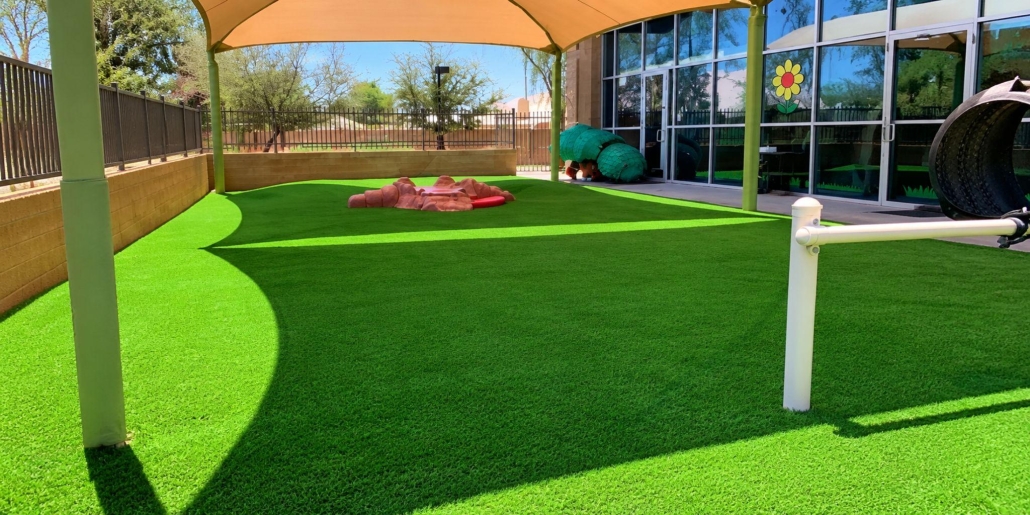
From Lawn to Play Space: How to Create a Safe Synthetic Grass Play Area
Want a safe synthetic grass play area? Three things matter most: a good base underneath, real cushioning, and turf actually made for kids, installed by people who know what they’re doing. Skip any one of those and even a nice-looking yard turns into a problem waiting to happen.
Synthetic Grass Masters has spent years building synthetic grass playgrounds for homes, schools, and daycares across Arizona, and that’s really where this guide comes from. So let’s get into how to plan a play space properly, what makes turf safe for kids, and what to check before hiring anyone.
The Real Safety Work Happens Underneath Artificial Grass
Most people look at the grass on top when picturing a play space. But the real work is happening below it. That cushioned base is what softens a fall. Skip it, and even soft-looking turf won’t do much good. This part of an artificial grass for playground project barely gets talked about, yet it might matter more than anything else in the whole setup.
Regular grass and dirt harden over time, especially somewhere as dry as Arizona, which raises the odds of a kid getting hurt off a slide or swing. A properly built turf system fixes that with a shock-absorbing pad, paired with turf made for play, not a front lawn. What you get is a surface that stays soft no matter how many kids are running on it.
- Shock pad thickness needs to match nearby equipment height. Taller structures need deeper cushioning to meet safety guidelines.
- Sub-base prep has to be done right, or the turf on top shifts and settles unevenly before long.
- Drainage keeps water from pooling underneath, which stops slippery spots and bacteria buildup.
- Seam work should go to trained hands. Loose seams near equipment cause a lot of trips.
- Fall zones need to stretch past just directly under the equipment, since kids don’t always fall straight down.
What Actually Makes Good Playground Turf
Here’s a mistake a lot of people make: putting regular lawn turf where kids play. The best artificial grass for playground use isn’t the same thing as decorative yard turf. It’s thicker, stitched tighter, and tested for repeated impact, not just for looking nice from the street. Non-toxic materials matter just as much as cushioning does. Here is what makes a good playground turf:
- Non-toxic, allergen-free materials, no pollen, no chemical treatments a real lawn would need.
- Cushioned, impact-tested construction, cutting down on the number one safety concern on any playground: falls.
- Heavier fiber density so it holds up under constant foot traffic instead of flattening out.
- UV-resistant coating so the color doesn’t wash out under the Arizona sun.
- Fast-draining backing, so a storm doesn’t leave you with mud the next day.
Designing a Play Area Kids Will Actually Use Well
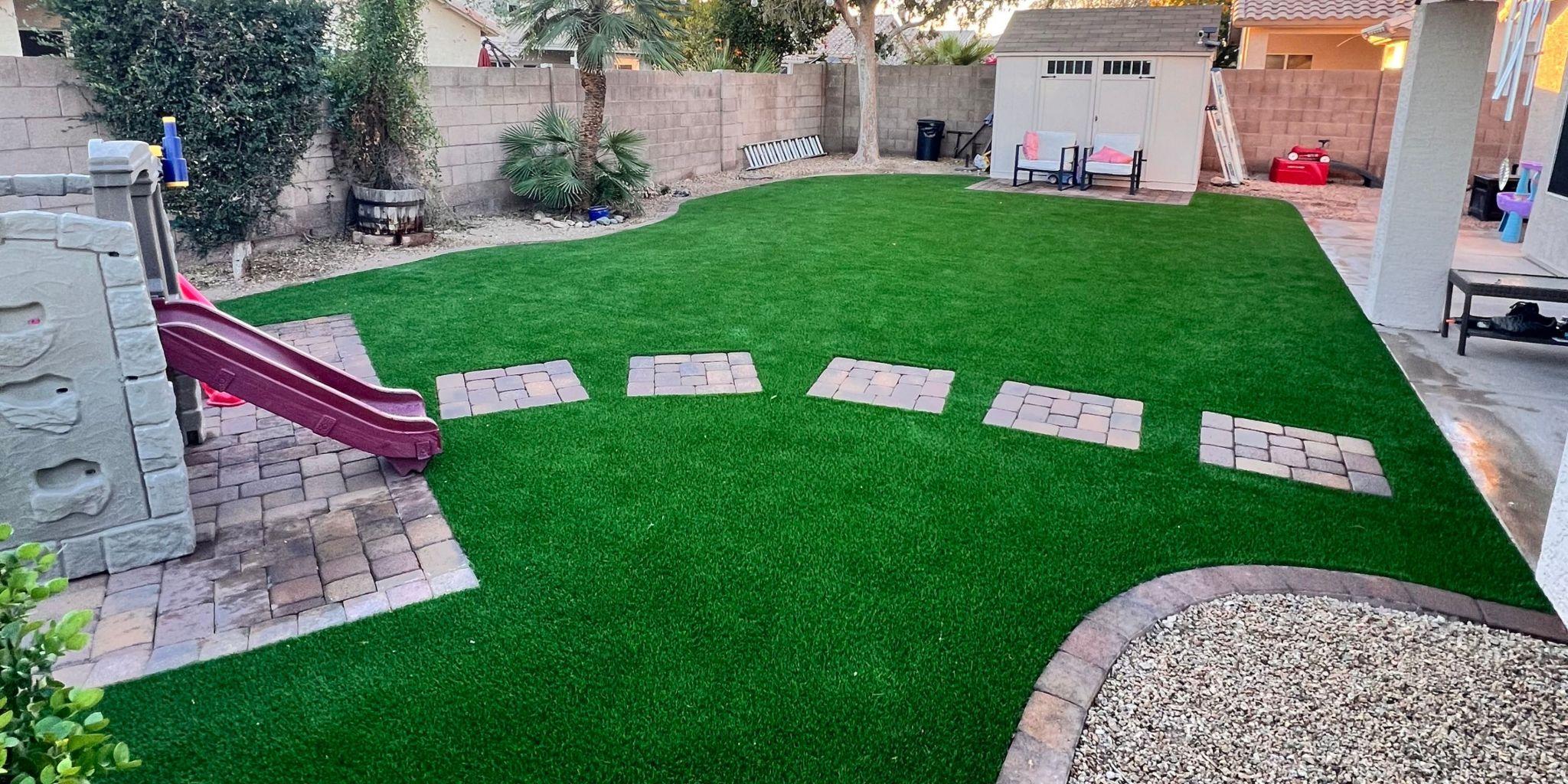 A good artificial turf playground needs more than decent materials. It needs real thought about how kids move through the space, where they run, climb, and bunch up together. Nail the layout and collisions go down, and the busiest spots stay properly cushioned instead of forgotten.
That starts with actually looking at the site first. Every yard, schoolyard, or daycare lot has its own slope and drainage quirks, so a copy-paste plan rarely works. A custom design takes all that into account, placing equipment and open running space so the whole area stays fun and safe.
- Site evaluation catches slope, drainage, and hazards before anything gets installed.
- Equipment gets placed with enough fall zone clearance around every swing and slide.
- Traffic flow gets mapped based on how kids actually move, cutting down on collision spots.
- Border work creates clean edges where turf meets pavers or mulch, no trip hazards.
- Trained crews keep the sub-base compacted right and seams placed so nothing shifts later.
Turf That Actually Feels Right for Kids
Safety’s the foundation, but comfort is what makes something actually count as kid friendly turf, not just a surface that passes inspection. Kids play barefoot. They sit down mid-game. They roll around without thinking twice. It has to feel right against skin, every season, not just look right in a photo. Add color that doesn’t fade year-round, and the space stays somewhere kids actually want to be, not somewhere they avoid in July.
- Soft, consistent texture that feels fine on bare feet and knees, unlike the coarser turf types out there.
- Hold up in any weather, staying dry and green whatever the season brings.
- Lower allergen exposure, less sneezing during the months that usually send kids indoors.
- Same good look year-round, no watering, no mowing, no patchy dead spots.
- Still performs the same after years of hard use as it did on day one.
Keeping It Safe Down the Road with Maintenance
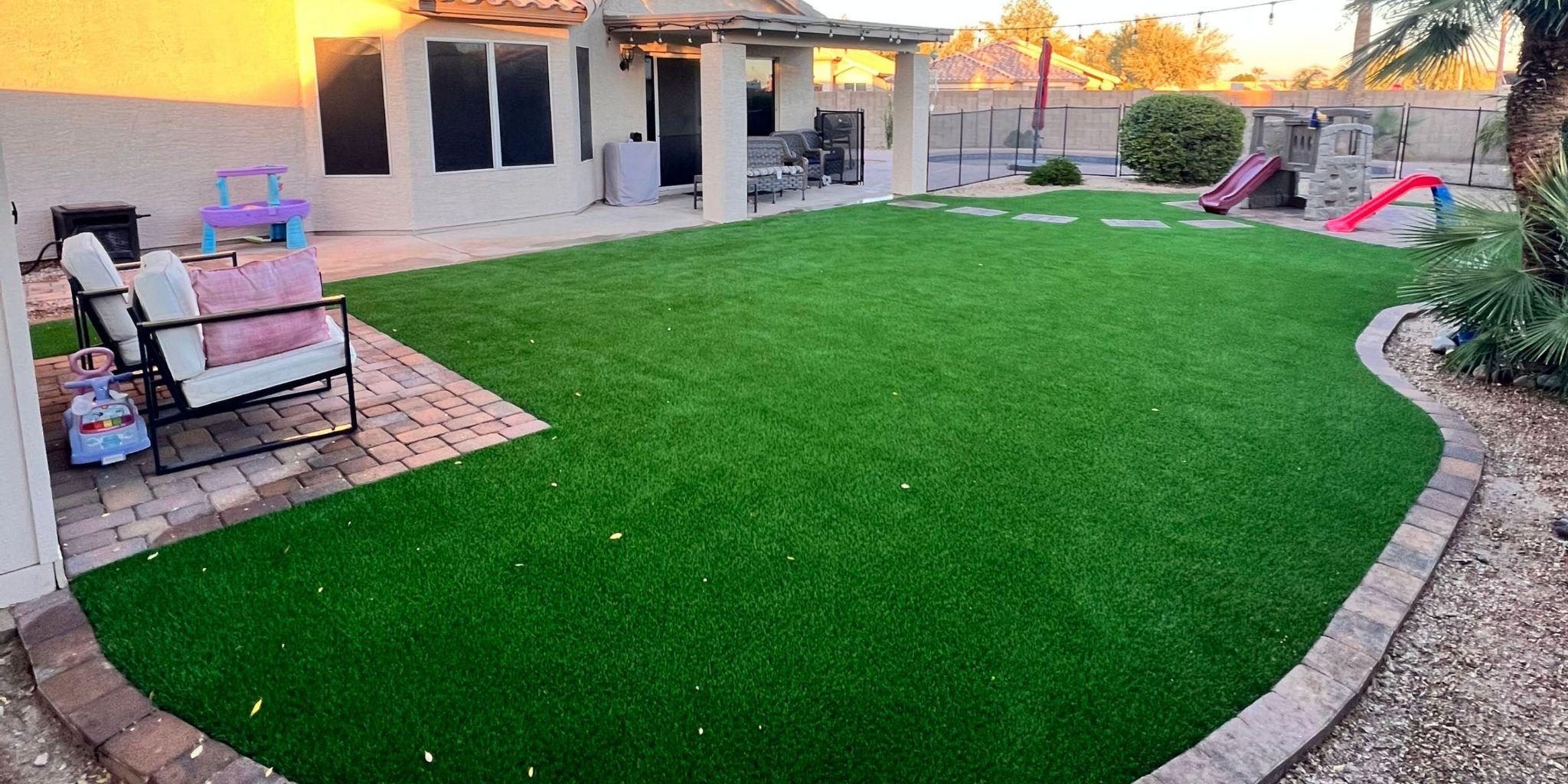 Getting good turf installed is really just step one. A play area needs regular attention to stay clean and safe, especially with kids on it daily and, often, pets too. Dust and buildup start affecting both the look and the hygiene if you let it go too long. Professional cleaning a couple of times a year is what handles odor and bacteria in the spots kids use most. Here is what you need to consider:
- Regular brushing keeps fibers upright, which keeps the cushioning working right.
- Clearing debris stops leaves and dirt from messing with drainage.
- A deeper clean now and then handles stains and odor a rinse won’t fix.
- Checking drainage confirms water’s still moving through as it should.
- Seasonal check-ins catch a loose seam or worn patch before it turns into something bigger.
Conclusion
A safe synthetic grass play area isn’t just about picking turf that looks good. It’s the base underneath, the material quality, a thoughtful layout, and regular upkeep, working together as one thing. Get those right and families and schools end up with a space that stays safe and fun for years.
Synthetic Grass Masters brings all of it together with licensed, experienced installation, giving families across Arizona a play space kids can actually enjoy for a long time. Contact us for a quote today!
Frequently Asked Questions
Q1. What makes a synthetic grass play area safe?
A safe area pairs a shock-absorbing base with durable, non-toxic turf built for active play, not decorative lawns.
Q2. How is playground turf different from regular lawn turf?
Playground turf uses denser fibers, tested cushioning, and non-toxic materials built to handle falls and heavy traffic safely.
Q3. How often should artificial turf playgrounds be cleaned?
At least twice a year works well, more often for busy areas or homes with pets around.
Q4. Can synthetic turf be installed around existing play equipment?
Yes, turf goes in around swings, slides, and climbers, with fall zones measured and cushioned around each one.
Q5. How long does artificial turf last in a play area?
Good quality playground turf usually lasts fifteen to twenty years, depending on use and maintenance.


 602-384-7746
