

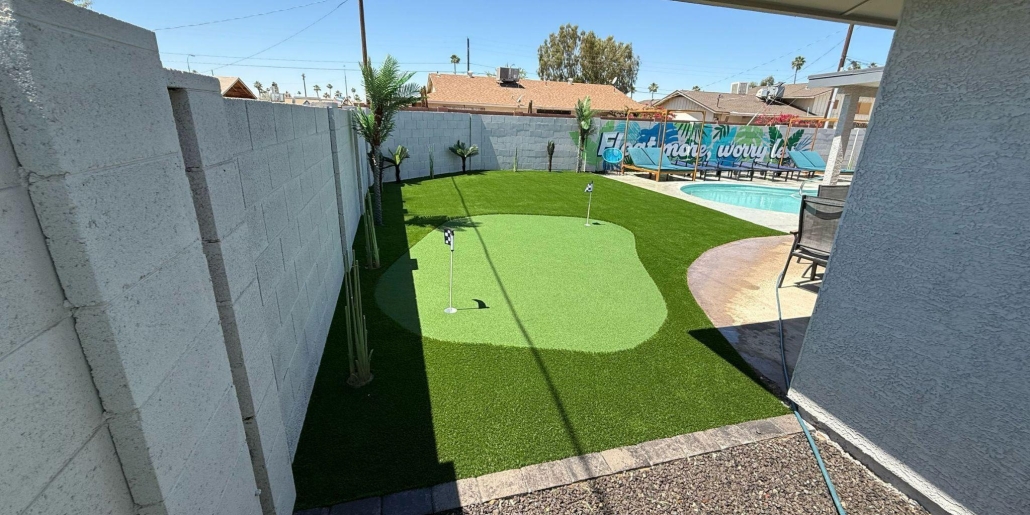
Sod vs Artificial Grass in Arizona: Which One is the Better Choice for Arizona Homeowners
Artificial grass is generally the best long-term lawn choice for Arizona due to extreme heat, severe water restrictions, and high irrigation costs, though natural sod wins out on upfront cost and surface temperature.Keeping a vibrant green lawn alive in the Sonoran Desert often feels like a punishing second job. Extreme climate realities – blistering 110°F summer days and strict municipal water conservation mandates – make traditional landscaping an uphill battle.
Property owners eventually face an issue. Natural sod versus modern synthetic turf. You might find yourself weighing turf vs sod right now. The following guide offers a straightforward breakdown covering upfront investment and ongoing maintenance. We will also look at utility bills and durability to help you decide which artificial grass Arizona makes sense for your home.
The Desert Reality: Why Growing Natural Sod is a Challenge in Arizona
The Water Crisis and Rising Municipal Tier Rates
Sustaining natural lawns in Arizona requires massive hydration. Cities like Phoenix and Scottsdale face persistent drought conditions. Local municipalities implemented strict drought surcharges and escalating tiered water rates to combat the issue. Your natural lawn demands significantly more water and those tier rates hit utility bills incredibly hard.
The Endless Maintenance Cycle: Bermuda vs. Winter Rye
Desert yards require a frustrating biannual transition between warm-season Bermuda grass in the summer and cool-season Perennial Ryegrass in the winter. You have to scalp summer grass right as the weather finally cools down. Heavy aeration and dethatching prepare the soil bed. Then comes the repetitive cost of buying new seed and specialized fertilizers along with weed control treatments every single year.
Arizona’s Unforgiving Caliche Soil and Monsoons
The ground here is packed with rocky caliche layers – a literal nightmare for root systems. Hard soil prevents deep root growth and creates severe drainage issues. Heavy summer monsoon downpours arrive and that poor drainage instantly turns natural sod yards into muddy pooling messes that track right into your living room.
Turf vs Sod: Head-to-Head Comparison for Desert Homes
| Feature | Natural Sod | Artificial Grass |
|---|---|---|
| Upfront Cost | Lower initially | Higher initially |
| 10-Year TCO | High expense | Very Low upkeep |
| Water Needs | 40–55 gallons per sq. ft. annually | Zero |
| Weekly Maintenance | Mowing, edging, weeding, fertilizing | Rinsing debris and brushing |
| Pet Cleanliness | Muddy paws and yellow urine spots | Clean and excellent drainage |
| Lifespan | Ongoing renewal required | 10–15 years maintained |
Upfront Installation vs. 10-Year Lifecycle Cost
Sod looks appealing on day one because of the lower purchase price. It acts as a permanent subscription service though. You constantly pay out of pocket — water bills and mower gas and seasonal seed. Turf flips the model completely. The higher initial capital outlay practically eliminates recurring monthly lawn expenses making the long-term lifecycle cost much more favorable.
Water Efficiency & Environmental Impact
The math on water conservation landscaping is impossible to ignore. Eliminating natural grass irrigation saves roughly 40 to 55 gallons of water per square foot every single year. Going synthetic also stops chemical runoff. You are no longer dumping synthetic fertilizers onto the ground that eventually seep into the local water table.
Time & Curb Appeal
Think about hours spent sweating behind a mower every weekend. Synthetic alternatives trade that exhausting labor for a simple occasional rinse and brush. You get a guarantee of 365-day pristine green aesthetics instead — no brown patches and no dead spots from the dog.
Key Takeaways
- Artificial grass is better suited to Arizona’s desert climate because it stays green year-round without relying on constant irrigation or seasonal reseeding.
- Natural sod has a lower upfront cost, but ongoing expenses for water, mowing, fertilizer, weed control, and seasonal maintenance can make it more expensive over time.
- Synthetic turf can significantly reduce water usage, making it a practical option for Arizona homeowners dealing with drought conditions and rising water costs.
- Artificial grass requires far less routine maintenance and eliminates common problems such as muddy areas, brown patches, frequent mowing, and pet-related lawn damage.
- Professional installation is essential in Arizona, especially because proper grading, drainage, and base preparation are critical when working with hard caliche soil.
- The best choice depends on your long-term plans and lifestyle, but homeowners seeking lower maintenance, consistent curb appeal, and long-term savings may benefit more from artificial grass.
The Practical Benefits of Synthetic Grass in Arizona Landscapes
Beat the Heat: Modern UV Protection & Cooling Infills
A historical knock against turf was how hot the surface got in the summer. The industry solved the problem entirely. Today’s synthetic grass Arizona installations utilize advanced evaporative cooling infills – technologies like HydroChill that drop surface temperatures by 30°F to 50°F. UV-stabilized polyethylene fibers withstand sustained desert sun exposure without fading or degrading.
Did You Know – Landscape irrigation accounts for up to 70% of residential water use in the Phoenix metro area. Switching a standard 1,000-square-foot lawn to synthetic turf saves a household up to 55,000 gallons of water annually!
Pet-Friendly, Mud-Free, and Allergen-Safe
High-quality artificial grass Arizona are an absolute game changer. Premium options feature antimicrobial backing and high-flow drainage layers that easily handle pet urine without holding onto odors. Say goodbye to muddy paws tracking desert dirt onto your clean floors during monsoon season. Removing natural sod significantly reduces grass pollen giving major relief to outdoor allergy sufferers.
HOA Compliance and Xeriscaping Synergy
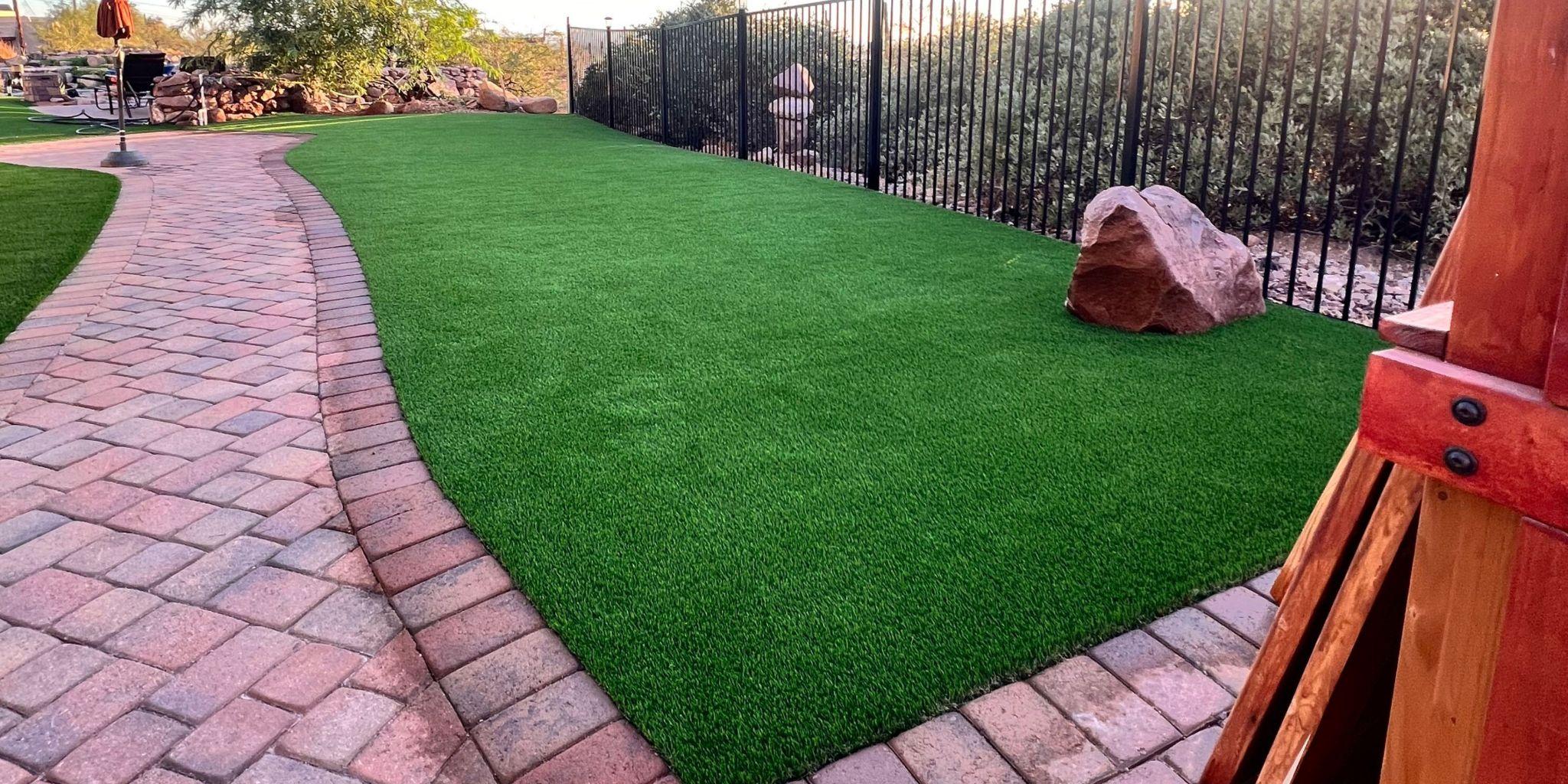
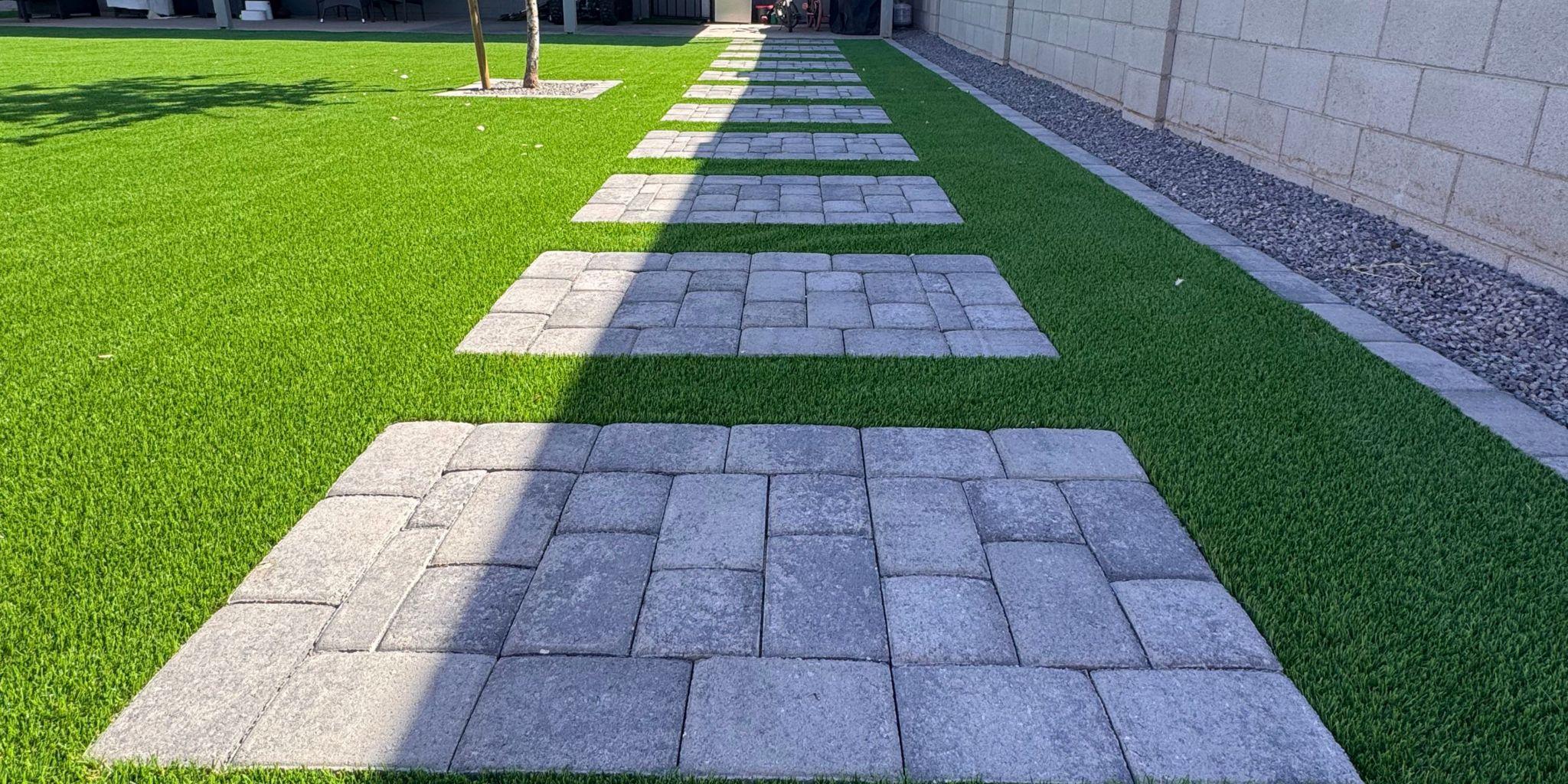
Homeowners often worry their Homeowners Association will block a turf project. Updated guidelines and state legislation heavily favor water-wise landscaping now. Modern artificial grass blends beautifully alongside native desert hardscaping and concrete pavers to create a stunning low-water oasis.
What to Consider Before Choosing Synthetic Turf in Arizona
Proper Base Preparation is Non-Negotiable
A proper grass lawn installation is only as good as the ground beneath it. DIY turf projects often fail in Arizona because of improper base work. Properly grading the yard and excavating that tough caliche base is critical. Applying the correct decomposed granite or crushed stone aggregate guarantees optimal drainage and prevents the turf from buckling.
Surface Temperatures in Direct Peak Sunlight
Setting realistic expectations is important. Any surface will warm up under direct 115°F sunlight. Smart landscape planning makes a huge difference here. Incorporating patio umbrellas or planting shade trees keeps the yard a comfortable play area for children and pets even during mid-day summer spikes.
Choosing the Right Pile Height and Density
Not all turf is created equal. A successful synthetic turf installation in Arizona requires matching the grass specifications to your primary use case. Short and dense styles work perfectly for custom backyard putting greens. Medium-high and durable options are ideal for high-traffic family yards and active dogs. Tall plush varieties are best suited for low-traffic commercial decorative areas.
Decision Matrix: Which Option is Right for Your Yard?
Situations Where Natural Sod Makes Sense:
- Homeowners planning to sell their property within one or two years who just need a quick cosmetic touch-up.
- Avid gardeners who genuinely enjoy the manual physical routine of weekend lawn care and mowing.
- Properties heavily covered by dense canopy shade where natural grass does not easily burn out in July.
Scenarios Where Synthetic Grass is the Superior Choice:
- Long-term homeowners are actively seeking immediate permanent reductions in their monthly water bills.
- Busy families and dog owners want a clean pest-free and mud-free outdoor play space that is always ready to use.
- Vacation home or rental property owners who need pristine curb appeal with absolutely zero hands-on upkeep while they are out of town.
Conclusion – Make the Smart Long-Term Investment for Your Lawn
Sod offers an initially cheaper installation. The ongoing financial and physical toll of maintaining natural grass in the desert makes artificial grass Arizona the smarter higher-ROI long-term investment. Water savings and zero-maintenance weekends easily offset upfront costs over the lifespan of the product.
If you are ready to upgrade your yard today, Synthetic Grass Masters is Phoenix Valley’s trusted expert for residential and commercial turf solutions. We provide custom solutions engineered specifically to withstand Arizona’s extreme desert conditions. Every project comes backed by industry-leading 10 to 15 year warranties.
Contact Synthetic Grass Masters to schedule your free in-home design consultation.
Frequently Asked Questions
1) How much money can artificial grass save on water bills in Arizona?
Replacing natural sod with synthetic turf eliminates constant lawn irrigation. The average household saves tens of thousands of gallons annually which drastically reduces tiered summer water bills.
2) Does artificial grass get too hot for dogs and kids in Phoenix summers?
Turf does warm up in direct sun. Modern installations use advanced evaporative cooling infills that drop surface temperatures by up to 50°F making the area safe and comfortable.
3) How long does synthetic turf last in the harsh Arizona sun?
High-quality UV-stabilized synthetic turf is specifically engineered for desert climates. The material typically lasts 15 to 20 years without fading or degrading.
4) Do HOAs in Arizona allow homeowners to install artificial turf?
Most Arizona HOAs and state laws support water-wise landscaping today. You will generally need to submit your high-quality turf design to the architectural committee for standard approval.
5) How long does it take for a synthetic turf installation in Arizona to pay for itself?
A typical synthetic turf installation Arizona pays for itself in four to six years. The break-even point happens through the combined elimination of water bills and fertilizers along with professional maintenance costs.


 602-384-7746
